Before we run a single ad, redesign a single page, or write a single blog for a jewellery brand, Kyros Solution answers eight questions about the business:
- Is the business growing, or is the gold price?
- Who buys, and who approves the purchase?
- Can a stranger verify your trust claims in under a minute?
- Where do buyers find you today, and where do they find competitors instead?
- What do AI assistants say about you, and is it true?
- Does your storefront convert a careful, high-value buyer?
- Can the numbers be trusted, and do you own the accounts they live in?
- Can the business handle more demand in time for the next peak?
The analysis usually takes about two weeks. It needs read-only access to your accounts and a sales export, and it ends with a one-page diagnosis, a 90-day plan of three to five actions, and a “not yet” list of things you should hold off on. Sometimes it ends with us advising a brand not to hire an agency yet, including us.
You do not need to hire anyone to use this method. Section one-hour version you can run yourself this week.
Key Takeaways
- Most audits check what the agency sells: An SEO agency audits SEO and an ads agency audits ads. We start with the business, because the real constraint for a jewellery brand is often trust, stock or margin, not traffic.
- Gold distorts every number: The World Gold Council says India’s jewellery demand fell 15% by volume but rose 34% by value in Q2 2026. Titan’s Q1 FY27 update showed buyer growth in the early double digits while average ticket sizes grew in the high double digits. We split your growth into price, grams, and buyers before we judge any channel.
- We check trust the way a buyer does: Our “stranger test” asks whether someone who has never heard of you can find the hallmark and HUID, the price breakdown, the certificate, and the exchange policy within a minute on a phone.
- AI answers are now part of the audit: India has about 100 million weekly ChatGPT users, according to OpenAI’s Sam Altman. We test 30 to 50 real buyer questions across Google AI Mode, ChatGPT, Gemini and Perplexity and log every wrong fact.
- Ownership comes before optimisation: If your Meta or Google ad accounts sit in a former freelancer’s or agency’s business account, fixing that comes first.
- The compliance clock is running: ASCI’s guidelines on AI-generated advertising were released on 29 September 2026 and take effect three months later. The consent manager phase of India’s data protection rules begins on 13 November 2026, and most remaining obligations apply from 13 May 2027.
- The most valuable output is often the “not yet” list: Knowing what not to spend on before the wedding season saves more money than any single optimisation.
Why We Analyse Before We Act
Search for how an agency analyses a brand before starting work, and you will mostly find three kinds of pages. There are general “discovery phase” articles from agencies abroad, which explain why discovery matters but rarely say what is checked. There are Indian agency service pages that compress the whole thing into one line, such as “Discover and audit, week 1”. And there are lists of the “top jewellery marketing agencies”, which tell you who to call but not what a good first two weeks should look like.
The “red flag” checklists that rank for hiring an agency point to the same gaps: generic proposals, activity reports instead of outcomes, senior people in the pitch and junior people on the account, and unclear reporting. Small online sellers, jewellers among them, who ask for help on the Shopify Community forum tend to hear the same diagnosis from other sellers too: fix trust and the product page before you spend more on ads.
For a jewellery brand in India, a generic audit misses five things that decide whether marketing works at all.
| What makes jewellery different | What a generic audit misses |
|---|---|
| Gold sets a large part of the price. | Revenue and ROAS rise when gold rises, even if you sell fewer pieces to fewer people. |
| Purchases are high value and trust-gated. | The deciding questions are about purity, weight, price logic, and resale, not ad targeting. |
| Many purchases are family decisions. | The person who approves the purchase may never visit your website. |
| Buyers research online and buy offline. | Redseer estimates 50 to 60% of daily-wear jewellery purchases are influenced online, so store sales hide much of what digital work achieves. |
| Demand is seasonal and regulated. | Festive and wedding peaks, hallmarking, lab-grown diamond terminology, and new AI advertising rules all shape what you can say and when. |
There is also a quieter problem. Every agency is tempted to audit the service it sells, because that audit always finds work. We have found that the constraint holding a jewellery brand back is often outside marketing entirely: a hero design that is always out of stock in the popular sizes, a WhatsApp inbox nobody answers on Sundays, or a making-charge discount that quietly removed the margin needed to pay for ads.
So our rule is simple. We diagnose the constraint first and choose the channel second. If you want the wider argument for working with a team that knows the category, our article on why jewellery brands need a specialised digital marketing agency covers it.
The Diagnostic at a Glance
Each of the eight questions has its own evidence and its own decision. This is the map we share with founders on the first call.
| Question | What we look at | What it decides |
|---|---|---|
| 1. Growing, or gold growing? | 24 months of sales by grams, pieces, buyers, category, and margin | Whether you need more buyers, better margin, or both, and how much you can afford to pay for a customer |
| 2. Who buys, and who approves? | Order data by city and occasion, DMs, WhatsApp chats, reviews, returns, store staff | Which audience, occasion, and message to lead with |
| 3. Can a stranger verify your trust claims? | Product pages, hallmark and HUID display, certificates, pricing, policies, diamond terminology, reviews | Which trust fixes come before any spend |
| 4. Where do buyers find you? | Search Console, Google Business Profile, Merchant Center, marketplaces, competitor search results | Where demand already exists and who owns it |
| 5. What do AI assistants say? | 30 to 50 buyer questions across four AI platforms | Which facts to correct and which answers you can realistically win |
| 6. Does the storefront convert? | Field speed data, mobile product pages, checkout and payments, WhatsApp and video-call handoff | Whether more traffic would make money or waste it |
| 7. Can we trust the numbers? | Account ownership, GA4, Meta and Google tracking, offline sales, consent records | Whether the plan can be measured honestly |
| 8. Can you handle more demand? | Stock on hero designs, lead times, dispatch, staffing, festive calendar, budget against margin | When to push, and how hard |
The rest of this guide takes each question in turn: why it matters, what we check, and what we most often find.
Question 1: Is the Business Growing, or Is Gold?
This is the first thing we look at, because it changes how every other number should be read.
Why it matters in 2026
Gold has made rupee revenue an unreliable measure of growth:
- Volume is falling while value rises: The World Gold Council’s India report for Q2 2026 shows jewellery demand of 75 tonnes, down 15% year on year, while its value rose 34% to ₹1,132 billion.
- The leaders are growing through ticket size: In its Q1 FY27 business update of 7 July 2026, Titan said its jewellery business grew 39%, with buyer growth in the early double digits and average ticket sizes growing in the high double digits.
- Forecasts say the gap will persist: Crisil Ratings expects organised gold jewellery retailers’ revenue to rise 20 to 25% in FY27 while volumes fall 13 to 15%.
- Prices swing hard within the year: Kotak Neo reported that gold crossed ₹2 lakh per 10 grams in late January 2026, and that MCX gold futures were at about ₹1.47 lakh by the end of September. On 5 October 2026, Goodreturns listed 22K gold at ₹1,36,750 per 10 grams. Comparing January sales with September sales in rupees tells you very little.
- The import duty changed mid-year: The government raised the effective import duty on gold and silver from 6% to 15% from 13 May 2026, and was reported in late August to be weighing a cut.
What we check
We ask for a sales export covering the last 24 months, with weight, karat, and category for each order where you have them. Then we build a simple “growth truth table” for the same months this year and last year:
| Measure | Why it matters |
|---|---|
| Rupee revenue | What the dashboard shows |
| Grams sold (gold) and pieces sold (all categories) | Volume that gold prices cannot inflate |
| Number of buyers, split into new and repeat | The real size of your customer base |
| Revenue split into metal value, making charges, and stones and other | Where your money is actually made |
| Making-charge realisation | Whether you protect your price or buy sales with discounts |
| Gross margin in rupees, by category | The money available to fund marketing |
| Repeat share of revenue | How much growth you get without paying for it again |
| Share of revenue from festive and wedding months | How exposed you are to one bad season |
| Returns, RTO and exchange share | The hidden cost behind every order |
A quick worked example
If your rupee sales this October are up 6% on last October, but the average gold rate you billed at is up 9%, you sold roughly 3% less gold by weight (1.06 divided by 1.09 is about 0.97). The report says growth. The business says shrinkage. We explain this in more depth in our guide on how to scale a jewellery business, under “growing or gold growing”.
What it changes in the plan
- Your affordable cost per customer: Redseer puts typical gross margins at 10 to 20% for gold jewellery, 30 to 40% for diamond jewellery and 40 to 50% for silver and platinum. A plain-gold brand can afford far less per new buyer than a silver or studded brand, so the same ROAS target can be healthy for one and ruinous for the other.
- What to measure monthly: If buyers are flat, the plan focuses on new-customer acquisition and reports new buyers and grams, not only revenue.
- How much to lean on retention: BlueStone says nearly 60% of its Q1 FY27 revenue came from repeat customers. If your repeat share is far lower, retention is usually the cheapest growth available, before any new ad spend.
What we often find
Revenue up, buyers flat, and making charges discounted to keep volume moving. Melorra’s story is a reminder of where growth bought with losses can lead in a business whose stock is gold: Inc42 reported that it raised about US$88 million and reached ₹364 crore in FY22 sales with a loss of about ₹107 crore, before running into distress in 2024.
Question 2: Who Buys, and Who Approves?
“Women aged 25 to 45 interested in jewellery” is not an audience. It is a description of half the country. We want to know who actually buys from you, for which occasion, and who else has a say.
What we check
- Order data by PIN code and city: Redseer estimates that Tier 3 cities and below are worth as much as Tier 1 and Tier 2 cities combined, and are growing at 14 to 16% a year. Many brands are surprised by how much of their demand already comes from towns they have never advertised in.
- Occasion mix: Wedding jewellery made up about 55% of the market in 2023 but is growing at 5 to 7% a year, while daily wear, at about 35%, is growing at 15 to 17%, according to Redseer. A brand that thinks of itself as bridal may be selling mostly daily wear, or the other way round.
- The questions customers ask: We read a sample of recent Instagram DMs, WhatsApp chats, reviews and return notes, and sort the questions into themes: size, weight, colour, purity, price, delivery, exchange and authenticity. These questions become the brief for product pages, creatives and FAQs.
- Who approves: In many Indian households, a high-value piece is approved by a parent, spouse, or in-law who only sees what gets forwarded on WhatsApp. We look at whether your product images and price details make sense when forwarded without context.
- Exchange behaviour: The World Gold Council says retailers reported a 10 to 20% rise in exchange volumes in Q2 2026, with exchange making up as much as 70% of sales in some cases. If your buyers pay partly in old gold, your messaging and your store process need to reflect it.
- Store staff: For brands with stores, we speak to two or three people on the floor. They hear objections that never reach the marketing team.
Channel reality check
We also compare where your buyers spend time with where your budget goes. DataReportal’s Digital 2026 India report, based on the platforms’ own ad planning tools, put YouTube’s ad reach at about 500 million people and Instagram’s at about 481 million in late 2025. Both are huge, and that is the point: reach is not the constraint. Relevance is.
What it changes in the plan
The answers decide the lead occasion for the next 90 days, the cities to test, the message for each stage of the journey, and whether the plan needs a “family approval” kit: a small set of images and facts designed to be forwarded on WhatsApp.
Question 3: Can a Stranger Verify Your Trust Claims in a Minute?
High-value jewellery is bought on trust. Your family name may carry that trust in your own city. Online, a stranger needs proof they can check.
The 60-second stranger test
We open your three best-selling product pages on a mid-range Android phone, on mobile data, and time how long it takes to find:
- The metal, karat, and weight
- The hallmark, the HUID, and how to verify it
- A price breakdown: gold rate used and its date, making charges, stone value, and GST
- The certificate for diamonds or gemstones, and which laboratory issued it
- The exchange, buyback, and return policy
- Reviews with real photos
- A way to talk to a person: WhatsApp, a phone number, or a video call
If any of these takes more than a minute, or is missing, we treat it as a trust gap that comes before any increase in ad spend. More traffic to a page that does not convince strangers only buys more drop-offs.
The rules we check against
- Hallmarking: Mandatory HUID hallmarking for gold jewellery covered 380 districts after its sixth phase in March 2026. A hallmark shows the BIS logo, the purity (for example, 22K916), and a six-digit HUID that buyers can check in the BIS CARE app. BIS raised the gold hallmarking fee to ₹75 per article from 14 September 2026, so we also check that pricing has absorbed it.
- Silver: HUID-based silver hallmarking has been voluntary since 1 September 2025. Business Today reported that 59 lakh silver articles were hallmarked in FY26, up from 32 lakh in FY25. For a silver brand, a voluntary HUID is a trust signal many competitors still lack.
- Diamond terminology: Under BIS standard IS 19469:2025, adopted in January 2026, the word “diamond” on its own means a natural diamond. A lab-grown stone should be described in full as a “laboratory-grown diamond” or “laboratory-created diamond”, and short forms such as “LGD”, “lab-grown” and “lab diamond” are not acceptable as formal disclosure. We check product titles, ads, captions, alt text, invoices and creator briefs.
- Tax: GST on gold and silver jewellery remains 3%, and we check that it is shown clearly rather than discovered at checkout.
- Advertising rules: We check paid and gifted creator posts for disclosure under ASCI’s influencer guidelines. We also check AI-generated or AI-altered visuals against ASCI’s new guidelines, released on 29 September 2026 and effective three months after publication. These require a label where AI use could materially influence a buyer’s decision, such as synthetic models or fabricated settings, while routine retouching and colour correction need no label.
- Consistency: We compare your business name, address, phone number, and opening hours across your website, Google Business Profile, Instagram, marketplaces, and directories. Inconsistent details confuse buyers and the systems that recommend businesses to them.
What it changes in the plan
Trust fixes are usually the cheapest and fastest wins in the whole diagnostic, and they lift every channel at once. Our guide on increasing jewellery website conversion rates covers the product page side in more detail.
This section is a practical summary, not legal advice. For specific wording or compliance decisions, confirm with your compliance adviser.
Question 4: Where Do Buyers Find You, and Where Do They Find Competitors?
Before we suggest any channel, we look at where demand already exists and who is capturing it.
What we check
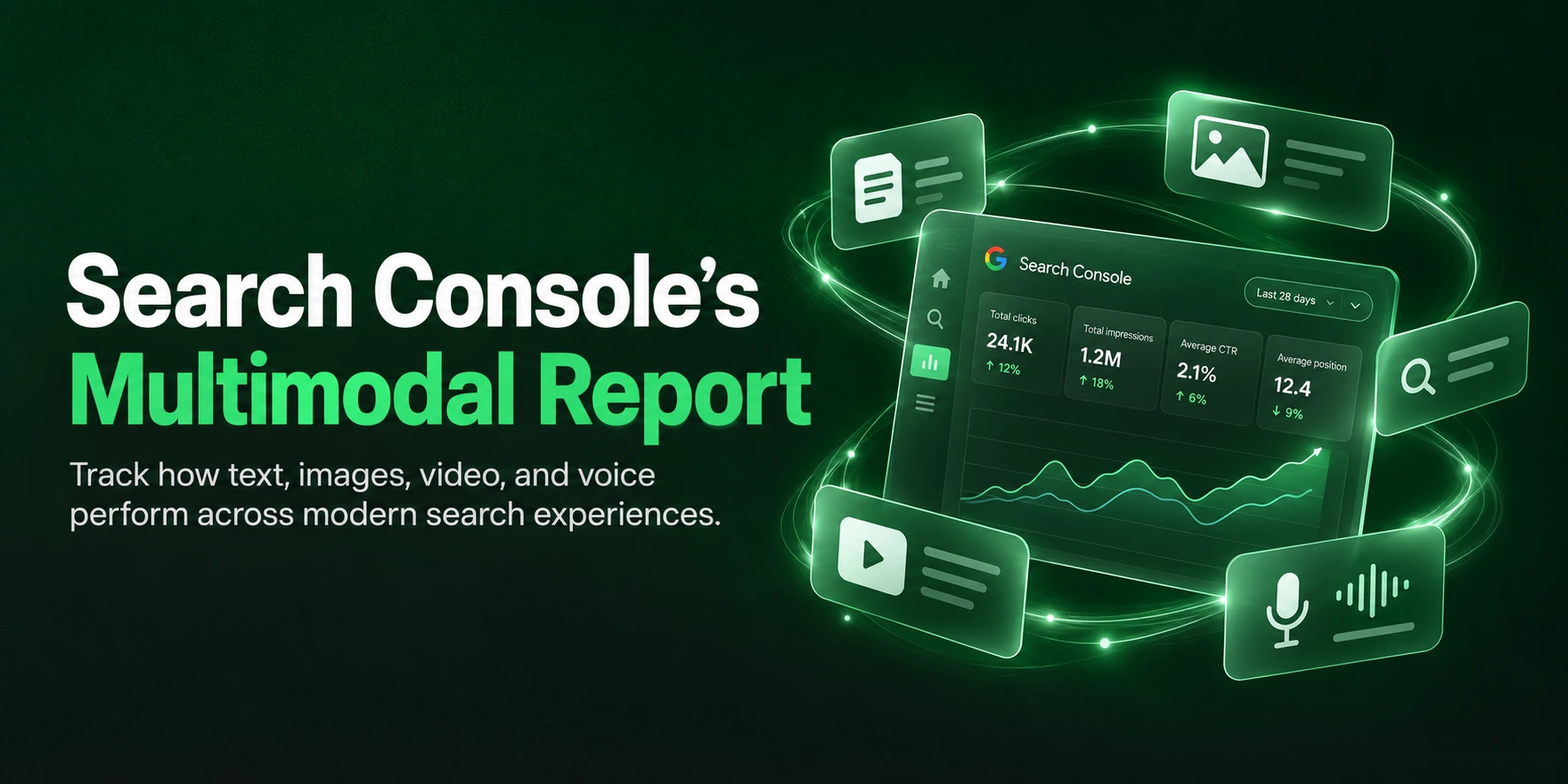
- Google Search Console: We split clicks into branded and non-branded searches, group the non-branded queries by theme (design names, karat, occasion, city, price), and look for pages that rank on page two for valuable searches. We also open two newer reports: the multimodal search type, added on 24 September 2026, which shows traffic from Google Lens, Circle to Search, image uploads and Chrome’s “Search this image”, though without query data; and the generative AI report introduced in June 2026, which shows impressions in Google’s AI features.
- Google Business Profile, for every store: Calls, direction requests, website clicks, review count and recency, photo quality, categories and product listings. For a store-led jeweller, this is often the highest-return asset in the whole account. Our guide on Google Maps visibility for jewellery stores covers what to fix.
- Google Merchant Center: Disapproved products, price and availability mismatches caused by gold rate updates, and image quality. Google recommends product images of 1,500 by 1,500 pixels or more, and its minimum for all products rises to 500 by 500 pixels from 31 January 2027.
- Visual search: We photograph your hero pieces and search them with Google Lens. Google has said India is its largest user base for both voice and visual search, so a design that cannot be found by photo is missing a real channel. See our explainer on Search Console’s multimodal report for jewellery brands.
- Marketplaces: For silver, demi-fine and fashion jewellery, Amazon, Myntra and similar platforms can be a meaningful share of demand. We check listing quality and whether marketplace pricing undercuts your own site.
The competitor map
We list the 20 to 30 searches that matter most to your range, such as “lightweight gold earrings for office”, “18K gold chain for men”, “laboratory-grown diamond engagement ring” or “jewellery shop near me” in your city, and record who appears in the ads, the organic results, the map pack, Shopping results and AI answers.
For most brands we analyse, the same names keep appearing: CaratLane, Tanishq and Mia, GIVA, BlueStone, Kalyan and Candere, Palmonas, and one or two strong local family jewellers. The useful question is not “how do we beat Tanishq?” It is “which searches are the big brands ignoring, and which local or niche questions can we own?” Our case studies on CaratLane, Tanishq, GIVA and Kalyan Jewellers show how we study category leaders.
What it changes in the plan
The search and maps data decides whether search should be a priority now, which pages to build or fix first, and how to split budget between capturing demand that already exists and creating new demand on social. Our comparison of SEO and GEO vs Google Ads for jewellery explains the trade-off.
Question 5: What Do AI Assistants Say About You, and Is It True?
Buyers now ask AI assistants which brand to trust, how 14K compares with 18K, or where to buy a mangalsutra in their city. OpenAI’s Sam Altman said in February 2026 that India has about 100 million weekly ChatGPT users. Google launched AI Mode in India in June 2025 and has since added Hindi and seven other Indian languages.
What we check
We write 30 to 50 questions that real buyers in your category ask, in English and, where your customers use them, in Hindi or a regional language. We group them into four types:
| Question type | Example |
|---|---|
| Explainer | “Is 18K gold good for daily wear?” |
| Shortlist | “Best brands for lightweight gold earrings in India” |
| Local | “Trusted jewellery shop in Surat for bridal sets” |
| Brand check | “Is [your brand] genuine? What are its making charges?” |
We run each question in Google AI Mode and AI Overviews, ChatGPT, Gemini, Claude, and Perplexity, and record four things: whether you are named, whether your pages are cited, which other sources are cited, and whether what is said about you is accurate.
The accuracy column is often the most valuable. Common errors include old store timings, outdated making charges or offers, discontinued collections, a laboratory-grown range described simply as “diamond”, and policies copied from a marketplace listing rather than your own site. Each error usually traces back to a page, listing, or directory that is out of date, and fixing the source is the only reliable fix.
A note on ChatGPT ads
OpenAI began showing ads to ChatGPT Free and Go users in India in late August 2026, and Indian Jeweller reported on 24 September that Tanishq is already using them for jewellery discovery. OpenAI states that ads do not influence ChatGPT’s answers. We treat paid AI placements and organic AI visibility as separate decisions, and we do not promise either one will put you inside the answer.
What it changes in the plan
The audit shows which answer types you can realistically win soon (usually specific explainers and local questions) and which take longer (broad shortlist and trust questions, which tend to favour long-established brands). Google says no special markup or “AI-only” content is needed to appear in its AI features, so the fixes are ordinary ones: accurate facts, helpful pages, consistent listings and real reviews. Our GEO guide for jewellery brands and our article on how ChatGPT, Gemini, Claude and Perplexity recommend jewellery brands go deeper.
Question 6: Does Your Storefront Convert a Careful Buyer?
A jewellery buyer spending ₹40,000 behaves differently from someone buying a ₹499 phone case. They compare, zoom, ask, wait, return to the page three times, and often want to speak to someone. We test the storefront the way that buyer uses it.
What we check
- Real-world speed: We use Chrome User Experience Report field data, not just a lab score, and check the three Core Web Vitals against Google’s “good” thresholds: Largest Contentful Paint within 2.5 seconds, Interaction to Next Paint within 200 milliseconds, and Cumulative Layout Shift of 0.1 or less. Heavy hero videos and uncompressed product images are the usual causes of slow jewellery sites.
- Product page completeness: Weight, karat, dimensions, true-scale worn images, a short video, the hallmark and certificate, the price breakdown, delivery time, and size guides. We compare your top pages with two direct competitors side by side.
- Payments: Since 15 September 2025, NPCI has allowed UPI payments to jewellery merchants of up to ₹2 lakh per transaction and ₹6 lakh a day. We check whether your payment gateway and checkout actually support those limits, and whether card EMI, net banking, and partial advance payments are available for higher tickets.
- Cash on delivery: Across Indian e-commerce, ProfitBox360’s research put the RTO rate at 24.3% for COD orders against 2.8% for prepaid orders. For jewellery, where each failed delivery carries insurance, packaging and security costs, we look closely at your COD policy, prepaid incentives and verification calls for high-value orders.
- The conversation handoff: We send enquiries the way your buyers do: on WhatsApp, as an Instagram DM, through the website chat and by phone, on a weekday and at the weekend. We ask a typical question, such as “Is this hallmarked, and can I see it on a video call?”, and time the reply. Slow replies are one of the most common and most fixable leaks we find.
- Store handoff: For brands with stores, we check that store pages, appointment booking, and directions work, and that staff knows what was promised online.
What it changes in the plan
If the storefront leaks, fixing it comes before scaling traffic, because every rupee of ad spend is multiplied by your conversion rate. If the storefront is solid, the plan can push harder on acquisition from week one. Choosing the right platform matters here too, which our guide on choosing a platform for your jewellery website covers.
Question 7: Can We Trust the Numbers, and Do You Own Them?
A plan is only as good as the data used to judge it. This part of the diagnostic is unglamorous, and it is where we find some of the most expensive problems.
Account ownership
We list every account your marketing depends on and who owns it:
- Meta business portfolio, ad accounts, Pixel and dataset, Instagram and Facebook pages
- Google Ads, Google Analytics 4, Google Tag Manager, Search Console, Merchant Center and every Google Business Profile
- Your domain and DNS, website platform, and WhatsApp Business number
- Email and SMS tools, and any CRM
Your business should own every one of these, with agencies and freelancers given partner or user access that can be removed. When an ad account or business portfolio is owned by a former freelancer or agency, a brand can lose years of ad history, audiences, and learning the day that relationship ends. If we find that, moving ownership is the first item in the plan.
Tracking and attribution
- GA4 settings: Standard GA4 properties keep event-level data for either 2 or 14 months. Google’s documentation says this setting only affects explorations and funnel reports, not standard reports, but a 2-month setting means you cannot run a detailed comparison of this festive season against the last one. We check purchase events, duplicates, and how WhatsApp and phone enquiries are recorded.
- Meta and Google tracking: We check that the Meta Conversions API is set up with deduplication, and that store sales are fed back to Meta and Google where possible. Meta discontinued its separate Offline Conversions API in May 2025, so offline events now need to flow through the main Conversions API.
- New versus returning buyers: We split the revenue each platform claims into new and returning customers, and branded versus non-branded search. A high ROAS built on retargeting existing customers and bidding on your own brand name can hide the fact that almost no new buyers are being found.
- Offline attribution: For store-led brands, we look at whether billing captures how a customer heard about you, and whether store visits can be linked back to campaigns, even roughly.
Data protection
India’s Digital Personal Data Protection Rules were notified in November 2025 with an 18-month phased rollout. Provisions for registered consent managers begin on 13 November 2026, and most remaining obligations, including notice, consent, security safeguards and breach reporting, apply from 13 May 2027. We check how your WhatsApp, SMS and email lists were collected and whether consent is recorded. During the diagnostic itself, we ask for aggregated or anonymised customer data wherever that is enough.
What it changes in the plan
Measurement fixes often fill the first two to four weeks of an engagement. That can feel slow, but without them nobody, including you, can tell whether the plan is working. Our comparison of Google Shopping vs Meta Ads for jewellery shows why clean attribution matters when you split budget between channels.
Question 8: Can the Business Handle More Demand in Time?
Marketing that works too well can hurt a jewellery brand. If orders arrive faster than you can make, check, and ship them, delays and complaints follow, and reviews turn.
What we check
- Stock on hero designs: In most catalogues, a small share of designs brings in most sales. We check whether those designs are in stock in the popular sizes and karats.
- Lead times: Made-to-order timelines, karigar and manufacturer capacity, and quality checks at dispatch, including weight, hallmark, and packing videos for high-value orders.
- Service capacity: Who answers customers, during which hours, and how many conversations they can handle on a peak day.
- Price updates: How quickly gold rate changes reach your website, product feeds, ads, and store tags. Fixed prices in creatives go out of date fast when gold moves thousands of rupees a week.
- The calendar: We map the plan against the dates that drive your category. For the season ahead, that means Sharad Navratri from 11 October, Karwa Chauth on 29 October, Dhanteras on 6 November and Diwali on 8 November 2026, commonly listed wedding muhurat dates in late November and early December, and Akshaya Tritiya on 8 May 2027. Muhurat dates vary by region, so we confirm them locally.
Budget against margin
Finally, we check whether the plan pays for itself. One published Indian pricing guide, from upGrowth, puts performance marketing retainers for early-stage brands at about ₹75,000 to ₹1.5 lakh a month, with percentage-based fees typically at 10 to 15% of ad spend. Here is the simple test we run:
If a brand pays ₹1 lakh a month in fees and spends ₹3 lakh on ads, at a 20% gross margin it needs about ₹20 lakh of additional monthly sales just to break even on marketing (₹4 lakh divided by 0.20). At a 40% margin, it needs about ₹10 lakh. That arithmetic, not ambition, sets how aggressive the first 90 days can be.
What it changes in the plan
The timing. Sometimes the right move is to push hard into the festive season. Sometimes it is to fix stock and service now, run a smaller festive test, and scale into the wedding season once operations can keep up.
How the Two Weeks Run: Timeline, Access and First Questions
The timeline
| When | What happens | What we need from you |
|---|---|---|
| Day 0 | A 45-minute discovery call with the founder or decision-maker. We sign a non-disclosure agreement and send the access list. | One hour of your time and the right person on the call |
| Days 1 to 3 | Access and data pulls. Mystery-shop enquiries go out. The AI question runs begin. | Read-only access and a sales export |
| Days 4 to 8 | Analysis across the eight questions, competitor mapping, and product page and checkout testing on real phones | Short answers to follow-up questions, and 20 minutes with store or customer service staff if you have them |
| Days 9 to 10 | We write the diagnosis and the plan, then walk you through it in a 90-minute session | The founder and anyone who will own actions |
Two weeks is typical. It runs longer when access takes time, and shorter for a single-store jeweller with fewer accounts.
What access we ask for, and why
We ask for the lowest level of access that lets us see the data. Admin access can wait until there is an engagement, and you should always keep ownership.
| Asset | Access level | Why we need it |
|---|---|---|
| Sales data from your store platform or ERP | A 24-month export with weight, karat, category, and city where available | Questions 1 and 2: growth truth table and buyer map |
| Google Analytics 4 | Viewer or analyst | Traffic, funnels, events, and the data retention setting |
| Google Search Console | Restricted user | Queries, pages, multimodal and AI impressions |
| Google Ads | Read-only, linked to our manager account | Search terms, brand share and conversion setup |
| Meta business portfolio | Partner access to ad accounts and datasets, analyst level | Ad history, creative performance and Conversions API health |
| Google Merchant Center | Standard read access | Product disapprovals and feed quality |
| Google Business Profile, for every store | Manager or a screen-share | Calls, directions, reviews and photos |
| Instagram and WhatsApp | A screen-share or an anonymised sample of recent conversations | The questions buyers actually ask |
| Returns, RTO and exchange records | A summary export | The hidden cost behind each order |
The questions we ask on the first call
These are the questions we ask nearly every jewellery founder. If you are meeting any agency soon, it is worth having answers ready.
About the business
- Last festive season, how many buyers did you serve, and how many grams or pieces did you sell?
- Which ten designs bring in most of your revenue?
- What is your gross margin by category once making, stones, hallmarking, shipping, and returns are counted?
- How do you set and update prices when gold moves?
- What are your exchange and buyback terms?
About buyers
- Who buys from you, for which occasions, and who else has a say in the purchase?
- Which cities and PIN codes send you the most orders?
- What do customers ask most often before they buy, and why do they return pieces?
About channels
- Where do your sales come from today: website, store, marketplaces, WhatsApp, or exhibitions?
- What has worked, what has failed, and why do you think it failed?
- What did previous agencies or freelancers do, and who set up your accounts?
About capacity and constraints
- How many more orders could you deliver next month without delays?
- What are your made-to-order lead times during the festive season?
- Who replies to customers, and during which hours?
About goals and limits
- What would make the next 12 months a success, in numbers?
- What can you spend on fees and media each month, and for how long, before you need to see a return?
- Who makes marketing decisions, and how quickly?
- What will you not do? For example: discount-making charges, offer COD on high-value pieces, or use AI-generated models.
- Which competitor do you admire, and which one do you lose sales to?
- What worries you most about the next six months?
What You Get at the End, With an Illustrative Example
The deliverables
- A one-page diagnosis. The single biggest constraint on your growth, in plain language, with the evidence behind it.
- The growth truth table. Revenue, grams, pieces, buyers, and margin, this year against last year.
- A trust and compliance checklist. Every gap from the stranger test, with the fix and who should own it.
- A visibility snapshot. Where you appear in search, maps, Shopping, visual search, and AI answers; where competitors appear instead, and every wrong fact we found.
- Measurement and ownership fixes. What to move, connect, or correct before anyone judges performance.
- A 90-day plan. Three to five actions, each with an owner, a deadline, and the metric that will show whether it worked.
- The “not yet” list. Things you should not spend on this quarter, and why.
- A fit decision. Whether we think an agency, an in-house hire, a freelancer, or no outside help is the right next step for you.
An illustrative example
This example is a composite built from patterns we often see. It is not a single client, and the numbers are illustrative.
A lightweight 14K and 18K gold brand from Surat, selling online and through one store, asks for help scaling Meta ads before Diwali. The diagnostic finds:
- Question 1: Revenue for August and September is up 14% from last year, but grams sold are down 4%, and the number of new buyers is flat.
- Question 2: A third of online orders come from Tier 2 and Tier 3 cities the brand has never targeted, mostly for daily-wear earrings bought as gifts.
- Question 3: The HUID is not shown on product pages; there is no price breakdown, and product titles describe the laboratory-grown range as “LGD”.
- Question 4: Most Google conversions come from people searching for the brand’s own name. The store’s Business Profile has 40 reviews, none from the last six months.
- Question 5: Two AI assistants give old store timings, and one describes the laboratory-grown range simply as “diamond”.
- Question 6: WhatsApp enquiries sent on Sunday wait more than four hours for a reply.
- Question 7: The Meta ad account sits in a former freelancer’s business portfolio, and 41% of the purchases Meta claims come from existing customers.
- Question 8: The best-selling ring is in stock in only two sizes.
The 90-day plan
- Days 1 to 30: Move ownership of the ad account, fix Conversions API deduplication, and start uploading store sales. Add the HUID, a price breakdown, and correct diamond terminology to every product page. Cover WhatsApp on Sundays. Restock the hero ring in core sizes.
- Days 31 to 60: Shift Meta budget towards new-customer campaigns built around gifting and daily wear, with creatives that show weight and scale. Test two Tier 2 cities. Refresh the store’s Business Profile and ask recent buyers for reviews.
- Days 61 to 90: Publish pages that answer the top buyer questions found in the DMs, correct the sources behind the AI errors, and prepare wedding-season gifting campaigns.
Not yet: advertising the new bridal line, launching on a marketplace, or opening a second store.
What we track: new buyers per week, grams sold, cost per new buyer, WhatsApp reply time, and store visits from the Business Profile.
The founder came for ads. The diagnostic showed that ads were the fourth problem, not the first.
Run a One-Hour Version Yourself
You can run a lighter version of the diagnostic this week, with no agency and no tools beyond a phone and your own accounts. Set a timer.
| Time | Check | What “good” looks like |
|---|---|---|
| 10 minutes | Compare this September with last September in grams or pieces, and in buyers, not just rupees | Buyers and volume are growing, not only revenue |
| 5 minutes | Open your best-selling product page on your phone using mobile data | Weight, karat, HUID, price breakdown, and exchange policy are all easy to find |
| 5 minutes | Search Google for your top three design names and “[your brand] reviews” | You appear, and what people see is accurate and recent |
| 5 minutes | Photograph your hero piece and search it with Google Lens | Your product page, or at least your brand, appears |
| 10 minutes | Ask ChatGPT, Gemini, Perplexity, and Google AI Mode: “Is [your brand] trustworthy?” and “Where can I buy [your hero design] in [your city]?” | Your brand is mentioned, and the facts are right |
| 5 minutes | Ask a friend to message you on WhatsApp and Instagram, and time the reply | A reply within an hour during business hours |
| 5 minutes | Check who is the admin of your Meta business portfolio and Google Ads account | Your business, not a former agency or freelancer |
| 2 minutes | In GA4, go to Admin, then Data collection and modification, then Data retention | Event data retention is set to 14 months |
| 5 minutes | Search your product titles, captions, and ads for “LGD”, “lab diamond,” and “lab-grown” | Laboratory-grown stones are described in full |
| 5 minutes | Compare stock of your top ten designs with the next 60 days of festivals and weddings | Hero designs are in stock in popular sizes |
That is 57 minutes. If three or more checks fail, fix those before you increase ad spend. If most of them pass, you are in a strong position to scale, with or without outside help.
When We Advise a Brand Not to Start Yet
Being honest about fit protects your money and our reputation. After a diagnostic, we sometimes recommend waiting, or a different kind of help, if:
- You lose money on the average order once making, shipping, returns, payment fees, and ads are counted. Marketing would only lose money faster.
- Product quality or delivery complaints are common. More visibility exposes problems sooner.
- We cannot see the data. Without sales data and read access, any plan is guesswork, and we would rather not guess with your budget.
- The budget cannot pay for itself. If fees plus media spend are larger than the gross margin the plan could realistically add, we say so and suggest a smaller start.
- You need guaranteed results. Nobody can guarantee rankings, AI citations, or a fixed ROAS, and anyone who promises them is promising something they do not control.
- You need a single task done. If you only need a catalogue shoot or a one-off website fix, a specialist freelancer or studio may be faster and cheaper.
- You want tactics we will not use. These include fake reviews, bought mentions, unlabelled AI models presented as real, or a laboratory-grown stone described as a diamond.
How to Judge Any Agency’s Pre-Work, Including Ours
Whoever you hire, the first two weeks tell you a lot about the next twelve months.
Ask these questions of any agency:
- Did they ask about grams, pieces, and buyers, or only revenue and ROAS?
- Did they look at your product pages the way a buyer would, on a phone?
- Did they check who owns your ad accounts and analytics?
- Did they separate new customers from returning ones, and branded searches from non-branded?
- Did they tell you something you did not want to hear?
- Did they say what they would not do, or what you should not do yet?
- Does the proposal pass the swap test? Replace your brand name with another jeweller’s. If the proposal still makes sense, it was not written for you.
- Who did the analysis, and will those people work on your account?
Our performance marketer’s checklist before hiring a jewellery agency and our guide on choosing a digital marketing partner that understands your jewellery brand go further. If you are still deciding whether to build a team instead, read in-house digital marketing vs an agency for jewellery brands.
Working With Kyros Solution
Kyros Solution is a digital marketing agency headquartered in Surat. We work only with D2C jewellery and lifestyle brands in India, which is why our diagnostic starts with gold, trust, and buyers rather than with channels.
Why a jewellery-only team reads the data differently. A general agency sees a 6x ROAS and calls it success. A jewellery team asks how much of that came from returning customers and a higher gold rate. A general agency sees a product page with good photos. A jewellery team notices the missing HUID, the “LGD” in the title, and the price that will be wrong by Diwali. That context decides what goes into the plan, not just how it is executed.
After the diagnostic, the plan decides the services, not the other way round:
| What the diagnostic finds | How we help |
|---|---|
| Buyers cannot find you, or AI answers get you wrong | SEO and GEO: search, maps, Shopping feeds, visual search and AI answer accuracy |
| Ads find returning customers but few new ones | Performance marketing on Meta and Google, with gold-aware feeds, new-customer reporting and offline conversions |
| Product pages and checkout leak careful buyers | UI and UX design and web development for trust sections, price breakdowns, speed and payments |
| Strangers do not yet trust the brand | Branding and content marketing that explain your craft, purity and pricing |
| Discovery depends on one or two viral posts | Social media management built around Reels, creators and customer content |
The case studies linked in section 6 show how we study category leaders, and our portfolio shows examples of our work.
Want to know what is really holding your jewellery brand back? Talk to Kyros Solution about a pre-work diagnostic before the wedding season. You will see your growth truth table, your trust gaps, what AI says about you, and the three to five actions that matter most, and you can keep the plan whether or not you work with us.
FAQs
What does a digital marketing agency analyse before starting work with a jewellery brand?
A good agency looks beyond ads and traffic. For a jewellery brand, that means growth adjusted for gold prices, who buys and who approves, trust signals such as HUID and price breakdowns, search and AI visibility, product page and checkout performance, tracking and account ownership, and whether stock and service can handle more demand.
How long does a jewellery brand audit take?
Our diagnostic usually takes about two weeks: a discovery call, two or three days of access and data pulls, about five days of analysis and testing, and a findings session. It can take longer if account access is slow, and less time for a single store with fewer accounts.
Should you give an agency admin access to your ad accounts?
Not for an audit. Read-only or analyst access is enough to diagnose. Keep ownership of every account in your own business, and give agencies partner or user access that you can remove at any time.
Is a marketing audit free or paid?
Both models exist in India. Free audits are often run on public data only, which cannot show your margins, tracking, or customer data, so they tend to find what the agency sells. Paid audits usually include your own data and a written plan. Whichever you choose, ask exactly what will be checked and whether you keep the findings.
What should you prepare before meeting a marketing agency?
A 24-month sales export with weight, karat, and category if possible, your gross margin by category, your ten best-selling designs, a list of every marketing account and who owns it, your festive calendar, and an honest view of how many more orders you can fulfil.
Why does the gold price matter in a marketing audit?
Because it inflates revenue and ROAS. When gold rises, the same number of pieces brings in more rupees. Without splitting growth into price, grams, and buyers, an agency can claim success while you are actually selling less.
What is a “not yet” list?
It is the list of things you should not spend on this quarter, such as a new channel, a second store or a bridal campaign, because a more basic constraint needs fixing first. It often saves more money than any single optimisation.
Can you analyse a family jewellery store that has no website?
Yes. The diagnostic shifts towards your Google Business Profile, reviews, WhatsApp and phone enquiries, store billing data and local search competition. Many of the most valuable fixes for a store-led jeweller do not need a website at all.
Do you check what ChatGPT and Google AI say about your brand?
Yes. We test 30 to 50 real buyer questions across Google AI Mode and AI Overviews, ChatGPT, Gemini, and Perplexity, and record whether you are mentioned, which sources are cited, and whether the facts are correct.
How do you know whether your agency owns your ad account?
In Meta Business Suite, open your business settings and check which business portfolio owns the ad account. In Google Ads, check the account’s access and security settings for admin users and linked manager accounts. If the owner is an agency or a freelancer, ask them to transfer ownership to your business.
How does India’s data protection law affect sharing customer data with an agency?
Under the DPDP Rules, most obligations on businesses apply from 13 May 2027, with consent manager provisions starting on 13 November 2026. Share aggregated or anonymised data wherever possible, sign a written data agreement with any agency that processes personal data, and check that your marketing lists were collected with consent.
What happens if the analysis shows you are not ready for an agency?
You keep the diagnosis and the plan. We will tell you what to fix first, whether that is pricing, stock, service, or tracking, and you can come back when those are in place, or carry the plan out yourself.