Generative engine optimization (GEO) is the work of making sure AI answer engines such as Google AI Overviews, AI Mode, ChatGPT, Gemini, and Perplexity understand your brand correctly, mention it, and cite your pages when people ask questions you can answer.
For jewellery brands in India, the most useful thing to know is this: AI does not answer every jewellery question the same way. When we checked live Google India results, “most trusted” questions went mostly to long-established names led by Tanishq, “best lab-grown brand” questions went to digital-first brands and brand-written listicles, a “14K vs 18K” question was led by a smaller jeweller’s blog post, and a “best bridal jeweller in Surat” question was answered almost entirely from Google Business Profiles.
GEO, done properly, is choosing which of those answers your brand can realistically win, and then earning it with the same fundamentals that good SEO has always rewarded.
Key Takeaways
- GEO is still SEO at its core. Google’s own July 2026 guide says optimizing for its generative AI features is still SEO, and that llms.txt files, content “chunking” and special AI markup are not needed.
- India is one of the biggest AI search markets in the world. ChatGPT has over 100 million weekly users in India, and Google says Indians are its largest user base for voice and visual search.
- Jewellery has four different AI answer types: trust, shortlist, explainer, and local/product. Each one is won by different signals.
- Smaller brands win explainer answers first. Brand size mattered least on specific, India-focused buying questions.
- Third-party proof matters more in AI than on your own site. Research shows AI engines lean heavily on earned media, Reddit and YouTube.
- AI answers make mistakes about jewellery brands. Clear, consistent brand facts are now a visibility asset, not just good housekeeping.
- Measurement is finally possible. Google Search Console now shows generative AI impressions, and you can track buyer prompts across AI platforms every month.
What Generative Engine Optimization Actually Means
A simple definition
Generative engine optimization is the practice of improving how often, and how accurately, your brand and content appear inside AI-generated answers.
Traditional SEO aims to rank a page in a list of links. GEO aims to make your brand part of the answer itself: named in the recommendation, quoted in the explanation, or linked as a source.
Where the term came from
The term was popularised by a 2023 research paper titled “GEO: Generative Engine Optimization” by researchers from Princeton, Georgia Tech, the Allen Institute for AI, and IIT Delhi. They tested how content changes affected visibility in AI-generated responses and found that adding citations, quotations from relevant sources, and statistics could lift visibility by up to 40% in their experiments.
That finding still shapes most GEO advice today. The simple version: AI systems prefer content that is specific, verifiable, and supported by evidence.
GEO, AEO, LLMO and “AI SEO”
You will see several labels for the same idea:
| Term | What people usually mean |
| GEO (generative engine optimization) | Visibility in AI-generated answers across Google, ChatGPT, Gemini, Perplexity, and others |
| AEO (answer engine optimization) | Being the direct answer to a question, including featured snippets and voice answers |
| LLMO (large language model optimization) | How language models describe and recommend your brand |
| AI SEO | A catch-all marketing label for all of the above |
Google’s position is clear. Its “Guide to Optimizing for Generative AI Features on Google Search,” published on 10 July 2026, says that from Google Search’s perspective, optimizing for generative AI search is still SEO, because AI Overviews and AI Mode are rooted in Google’s core ranking and quality systems.
So why use a separate term at all? Because the emphasis shifts. In AI answers, third-party mentions, clear brand facts, question-level content, and structured product data carry more weight than they did when the goal was simply ranking one page for one keyword.
Why GEO Matters for Jewellery Brands
India is not a follower market in AI search
A few facts that make India different:
- ChatGPT: Sam Altman said in February 2026 that India has over 100 million weekly ChatGPT users, making it OpenAI’s second-largest market. OpenAI made its ChatGPT Go plan free for 12 months for eligible Indian users from November 2025.
- Google AI Mode: AI Mode launched in India in English, then Hindi in September 2025, and added Bengali, Kannada, Malayalam, Marathi, Tamil, Telugu, and Urdu in October 2025.
- Voice and visual search: Google’s VP of product for Search, Hema Budaraju, said people in India form Google’s largest user base for both voice and visual search globally. Google also reported that India led the world in Google Lens usage in 2025.
- Telecom bundles: Airtel’s Perplexity Pro offer and Jio’s Gemini access have put premium AI assistants on millions of Indian phones at no extra cost.
For a jewellery brand, the visual search point matters most. A buyer can photograph a necklace at a wedding, ask Google what it is, and get an AI answer with shopping options. If your product data is thin, you are not in that answer.
Jewellery is a research-heavy purchase
With 22K gold at ₹1,42,350 per 10 grams on 24 September 2026, even a modest bridal set is a major financial decision for most families. Buyers research purity, making charges, HUID hallmarking, exchange policies, lab-grown versus natural diamonds, and resale value before they visit a store or pay online.
These are exactly the long, specific, follow-up style questions that AI answer engines are built to handle.
The market has noticed. On 24 September 2026, Indian Jeweller reported that Tanishq had become the first jewellery brand in India to advertise on ChatGPT Ads, focusing on its gold exchange programme and Rivaah wedding line. Tanishq’s CMO described the goal as engaging consumers at the moment of exploration.
The click is shrinking, but the visit is getting more valuable
Two sets of numbers need to be read together:
| What is happening | Evidence |
| Fewer clicks when AI Overviews appear | Ahrefs found AI Overviews correlated with a 58% lower click-through rate for the number one organic result (December 2025 data, 300,000 keywords) |
| AI Overviews do not appear everywhere | Ahrefs’ Q1 2026 benchmark found AI Overviews on 21% of keywords across 146 million results pages, though far more often on question and business-intent searches |
| Google still dominates referrals | The same Ahrefs report found Google sends about 190 times more traffic to websites than ChatGPT |
| AI visitors behave like buyers | Adobe reported AI-referred traffic to US retail sites rose 693% year on year in the 2025 holiday season and converted 31% better than other traffic (US data only) |
The practical conclusion: do not abandon Google SEO for AI hacks. Google organic search is still the largest source of discovery. GEO is about making sure that when an AI answer does appear, your brand is inside it, described correctly.
If you are building your overall marketing plan, our guide on how to market a jewellery brand in India covers how SEO and GEO fit alongside performance, social and retail.
What Google India’s AI Answers Cited for Jewellery Questions (Our Live Check)
Most GEO guides tell you what AI “prefers” in general. We wanted to see what Google’s AI answers in India actually cite for jewellery buyers.
How we checked
On 24 September 2026, we ran five searches on Google India (English interface) and recorded which brands were named and which pages were cited in the AI answer at the top of the results.
This is a snapshot, not a scientific study. AI answers change by user, location, time, and wording. But the patterns were clear enough to be useful.
What we found
| Search | Brands named in the AI answer | What the AI answer cited |
| generative engine optimization | Not applicable | An Indian agency service page, Semrush, Coursera, Straight North, an arXiv research paper, and a Web Wonks guide. No retail or jewellery source. |
| best lab grown diamond jewellery brand in India | Limelight and Jewelbox first, then Heer by GIVA, Aukera, Fiona Diamonds and Onya | Brand homepages, a GIVA collection page, a Limelight blog post about an award, two brand-written “top brands” listicles (one ranks its own brand first), a GIVA Instagram Reel and a Google Shopping product card |
| Which is the most trusted website to buy gold jewellery online in India | Tanishq, CaratLane, Senco, Kalyan (with Candere), Malabar and BlueStone | BlueStone’s homepage, a Senco gold category page that includes a written answer to “where to buy gold jewellery online”, and a Google Shopping product card |
| Is 18k or 14k gold better for daily wear diamond ring India | Not a brand question, but the lead citation was Goenka Jewellers | Two Goenka Jewellers blog posts (one dated 26 March 2026), Mia by Tanishq, Krishna Jewellers, Eternz, House of Raayaa, an Angara YouTube Short, and a Shine Jewel post written for US buyers |
| best jewellery shop in surat for bridal gold | Three local Surat showrooms, each shown with a 4.9-star rating | Google Business Profile listings. No websites and no national chains. |
Six patterns worth noticing
- Big brands do not automatically win: Titan’s lab-grown diamond brand beYon, launched in December 2025, did not appear in the lab-grown answer, while younger specialists did. For the 14K vs 18K question, a smaller jeweller’s blog post was cited ahead of Mia by Tanishq.
- Specific explainer pages punch above their weight: Goenka Jewellers appears to have earned the lead citation with two tightly focused pages that answer the exact question for Indian buyers, including the lab-grown diamond angle.
- Brand-written listicles are being cited: One brand’s “top lab-grown brands” list ranked itself first and got that brand into Google’s AI answer. Peec AI found roughly 1 in 10 AI citations came from self-promotional listicles between December 2025 and February 2026. It works today. We explain in section 7 why we still do not recommend the thin version of it.
- Social video is a source: An Instagram Reel and a YouTube Short were both cited as sources. AI answers are not text-only.
- Product data and profiles feed answers directly: Google Shopping product cards appeared as sources in two answers, and the local answer came entirely from Google Business Profiles.
- AI answers get jewellery facts wrong: The “most trusted website” answer described CaratLane as “partnered with Tanishq,” when Titan Company has fully owned CaratLane since buying the remaining 27.18% stake in 2023. The 14K vs 18K answer cited a page written for US buyers in response to an India-specific question.
A separate study makes the same point at scale. Rings.com’s US-focused August 2026 AI jewellery study, which scored 2,400 responses across ChatGPT, Gemini, Perplexity and Claude models, found that the platforms recommended materially different brands, and that nearly nine in ten responses failed to reflect James Allen’s consolidation into Signet, completed in spring 2026. AI systems carry stale and incorrect facts, and the brands affected often do not know.
The Four Jewellery Answer Types, and Who Wins Each
Our live check points to a simple framework. Before you “do GEO,” decide which type of AI answer you are trying to win. Each one is decided by different signals.
| Answer type | Example buyer questions | What the AI leaned on | Who can realistically win | Our estimate of time to impact |
| Trust answers | Most trusted jeweller online, is this brand genuine, is it safe to buy gold online | Years of brand mentions, press, reviews, long-standing entities | Established brands; newer brands only through strong third-party proof | 12 months or more |
| Shortlist answers | Best lab-grown diamond brand in India, best daily wear jewellery brand, best brand for mangalsutra | Clear brand positioning on homepages and collection pages, third-party lists, social video | Focused D2C brands that own a clear category | 3 to 9 months |
| Explainer answers | 14K vs 18K, how to check HUID, what are making charges, lab-grown vs natural resale value | Specific, India-focused explainer pages with facts and comparisons | Any brand, including small and regional jewellers | 4 to 12 weeks |
| Local and product answers | Best bridal jeweller in Surat, jeweller near me, a photo of a necklace | Google Business Profile, ratings and reviews, Merchant Center product data | Store-led jewellers and brands with complete product feeds | 2 to 8 weeks |
Time-to-impact figures are our planning estimates, not measured results or guarantees. AI visibility depends on competition, existing authority, and how often AI answers appear for your target questions.
What this means in practice
- If you are a newer D2C brand, do not start by trying to win “most trusted jeweller in India.” Start with explainer answers in your category and shortlist answers for a specific niche you own, such as lab-grown solitaires, 9K and 14K daily wear, or temple jewellery.
- If you are a regional or store-led jeweller, local answers are your fastest win. Your Google Business Profile, reviews, and photos are, in effect, your GEO strategy for “near me” and city searches.
- If you are an established brand, your biggest GEO risk is inaccuracy. Check how AI describes your ownership, purity promises, exchange policy, and pricing, because a wrong answer can cost you the trust you spent decades earning.
GEO vs SEO: What Changes and What Does Not
| Area | Traditional SEO focus | What GEO adds or shifts |
| Goal | Rank a page for a keyword | Be named, quoted, or cited inside an AI answer |
| Unit of competition | Ten blue links | A handful of cited sources and named brands |
| Query style | Short keywords like “gold earrings” | Long, specific questions with follow-ups, often in Hindi or regional languages, by voice or camera |
| Authority signals | Backlinks and on-site content | Brand mentions across the web, YouTube, Reddit, reviews, press and earned media |
| Content | Pages built around keywords | Pages built around real buyer questions, with facts, numbers and comparisons |
| Brand facts | Mostly a branding issue | A visibility issue: AI repeats whatever facts it finds most consistently |
| Product data | Useful for Shopping ads | Feeds AI answers directly through Merchant Center and product cards |
| Measurement | Rankings, clicks, traffic | AI impressions, prompt-level mentions, citations, accuracy, and assisted conversions |
Why rankings still matter
AI answers do not ignore search rankings. An Ahrefs study published in July 2025 found that 76% of the top three visible citations in AI Overviews came from pages ranking in Google’s top ten. A later Ahrefs analysis, counting every citation in each AI Overview, put the share closer to 38%.
Part of that gap is counting method: the first study looked only at the three most visible citations. Part of it is how Google now builds answers. AI Overviews have run on Gemini 3 since January 2026, and Ahrefs observed that they lean more on sources from “query fan-out,” where Google runs several related searches behind the scenes and pulls sources from those results too. For a query like “is lab-grown diamond worth it in India,” the fan-out might include resale value, certification, price per carat, and how to tell the difference.
The lesson: rank for the sub-questions, not only the headline keyword. A brand with strong pages on resale, certification, and price comparison has several chances to be cited, even if it never ranks first for the main query.
GEO Myths That Waste Your Budget
Much of what is sold as GEO in India today is repackaged SEO, and some of it is not useful at all. Here is what Google’s July 2026 guide and the evidence say.
Myth 1: You need an llms.txt file. Google states that its Search does not use llms.txt files, and that they neither help nor harm. Practitioners on Reddit and in SEO communities have shared server log analyses showing that live AI answer crawlers rarely request the file. It takes minutes to create, so there is no harm in having one, but it is not a strategy.
Myth 2: You must “chunk” content into tiny pieces for AI. Google says there is no requirement to break content into small pieces and that its systems can understand pages covering several topics. Clear headings help readers and AI alike. Cutting a useful guide into dozens of thin fragments does not.
Myth 3: You need a separate page for every question variation. Google explicitly warns that creating separate content for every query variation to manipulate rankings can violate its scaled content abuse policy. One strong page on “HUID hallmark verification” beats twenty near-identical pages targeting each phrasing.
Myth 4: Special “AI schema” gets you cited. Google says no special schema.org markup is needed for generative AI features. Structured data is still worth using for rich results and product information, but it must match what is visible on the page.
Myth 5: Buying mentions or planting reviews works. Google says seeking inauthentic mentions is not helpful and that its spam systems are designed to block it. In jewellery, where trust is everything, being caught with fake reviews costs far more than it could ever earn.
A telling irony: when we searched “generative engine optimization” on Google India, the AI answer itself recommended question-based subheadings, bulleted summaries, and “machine scannability.” Google’s own documentation says rewriting for AI and chunking are not required. Even AI answers about GEO repeat popular advice that the search engine’s own guidance does not support. Verify before you buy.
The Jewellery GEO Playbook: 9 Things That Earn AI Visibility
1. Build question-level pages for the questions buyers ask before spending lakhs
List the 30 to 50 questions your sales team and store staff hear every week. For most Indian jewellery brands, they include:
- What are your making charges, and are they charged on gross or net weight?
- How do I verify the HUID hallmark on my jewellery?
- 14K vs 18K vs 22K: which is right for daily wear, and which for investment?
- Lab-grown vs natural diamonds: what is the resale and exchange value?
- IGI vs GIA vs SGL certification: what is the difference?
- What deduction applies if I exchange or sell back this piece later?
- How does today’s gold rate affect the price of this necklace?
Then build one strong page per real question cluster. Each page should give a direct answer in the first two or three sentences, then support it with specifics: percentages, rupee examples, tables, and the date the information was last checked.
This is where smaller brands win. The Goenka Jewellers example shows that a smaller jeweller with a focused, India-specific page can be the lead source over a much larger brand.
2. Make your brand facts unambiguous everywhere
AI repeats the facts it sees most consistently. If your website says one thing about exchange deductions, your terms page says another, and a marketplace listing says a third, AI will either pick one at random or merge them into something wrong.
Audit and align these facts across your website, Google Business Profile, marketplaces, social bios, press coverage, and any directory listings:
- Legal name, founding year, ownership, and parent company
- Metal purity promises and hallmarking
- Certification bodies used for diamonds and gemstones
- Exchange, buyback, return, and lifetime maintenance policies
- Store locations, cities served, and delivery coverage
Put these in crawlable text, not only in images or PDFs. Many jewellery websites show size guides, certification details, and policy summaries as graphics, which makes them harder for AI systems to read and quote.
Brand clarity is also a positioning question. Our article on jewellery branding vs marketing explains how to define what you stand for before you try to get AI to repeat it.
3. Earn third-party mentions, because AI trusts others more than it trusts you
A 2025 research paper, “Generative Engine Optimization: How to Dominate AI Search” (arXiv 2509.08919), found that AI search engines showed a systematic and overwhelming bias toward earned media, meaning third-party and authoritative sources, over brand-owned and social content. Google’s own AI answer for “generative engine optimization” cited this paper.
Other data points in the same direction:
- Ahrefs’ study of 75,000 brands found that YouTube mentions correlated more strongly with AI brand visibility than any other metric it measured, while link volume showed only weak correlation.
- Peec AI found Reddit ranked first or second among cited domains across all five major AI platforms it tracked in March 2026.
For Indian jewellery brands, practical earned-media sources include:
- Jewellery and retail trade press
- Business and lifestyle publications covering launches, funding, or data you publish
- Wedding planning platforms and bridal blogs
- YouTube creators who review jewellery, compare brands, or explain gold buying
- Community discussions on Reddit (such as r/GoldIndia and r/IndianFashionAddicts) and Quora
Participate as a helpful expert, disclose who you are, and never plant fake reviews or posts. Communities spot astroturfing quickly, and AI systems learn from what those communities say about you.
4. Publish honest comparison content instead of thin self-ranking lists
Self-promotional “top 10 brands” lists that rank the author first are being cited right now. We still advise against the thin version, for three reasons: readers see through them, they invite scrutiny under Google’s quality and spam systems, and they tend to lose value the moment AI systems weight them down.
The better version is an honest comparison with a clear methodology. State who you are, explain your criteria (certification, price per carat, making charges, return policy), include competitors’ real strengths, and be specific about who each option suits. These pages earn citations, links, and trust at the same time.
5. Treat short video as a GEO asset
An Instagram Reel and a YouTube Short were both cited in our live check, and Ahrefs found YouTube mentions to be the strongest signal of AI brand visibility.
Make short explainer videos for your top buyer questions: how to read a hallmark, what 14K looks like next to 18K, how a lab-grown diamond is certified. Use spoken, descriptive titles and descriptions that say exactly what the video answers. Embed the videos on the matching explainer pages.
For platform choices and formats, see our guide to the best social media platforms for jewellery brands.
6. Complete your Merchant Center product data
Google Shopping product cards appeared as sources in two of our five checks. Google’s guide also names Merchant Center feeds as a direct route into AI responses, and in May 2026 Google announced AI performance insights in Merchant Center, a tool for tracking brand visibility on AI surfaces against competitors, with India among the launch markets.
For jewellery, a complete feed goes beyond title, price, and image. Include metal type, karat, gold weight, stone type, carat weight, certification, colour and clarity, gender and occasion where relevant. Keep prices synced with gold rate changes so AI answers and product cards do not show stale prices.
If you are deciding how much to invest in Google Shopping versus Meta, our comparison of Google Shopping vs Meta Ads for jewellery brands breaks down where each channel fits.
7. Treat Google Business Profile as your local GEO strategy
Our Surat bridal jewellery search produced an AI answer built entirely from Google Business Profiles. Three local showrooms were named, each with a 4.9 star rating, and no website was cited.
For store-led jewellers, this means:
- Keep categories, hours, services and products current
- Add real photos of the store, staff and collections, updated regularly
- Ask every satisfied customer for a review, and reply to every review, including negative ones
- Answer common questions in your profile and on your store pages
Brands with stores in several cities should give each location its own useful page and profile. We explain the risks and the right structure in our article on targeting multiple locations without hurting your SEO.
8. Make sure AI crawlers can read your site
None of the above works if AI systems cannot access your pages. Check that:
- Your robots.txt and firewall or CDN rules do not block Googlebot, Bingbot, or the crawlers used by AI answer engines, such as OAI-SearchBot and ChatGPT-User for ChatGPT and PerplexityBot for Perplexity, unless you have deliberately chosen to block them
- Key content (prices, product details, policies, FAQs) appears in the HTML, not only after heavy JavaScript loads or inside images
- Pages load fast on mid-range Android phones on mobile data, which is how a large share of Indian buyers browse
Jewellery websites often struggle here because of heavy imagery, 3D viewers, and video. Good UI and UX design for jewellery ecommerce and a clean web development setup make the difference between a site AI can read and one it skips.
9. Go multilingual only where you can serve the customer
AI Mode now works in Hindi and seven other Indian languages, and Indians are Google’s largest user base for voice search. A Gujarati, Tamil, or Bengali explainer on bridal jewellery traditions can reach buyers that English-only competitors miss.
Only do this if you can serve customers in that language: customer support, product descriptions, and checkout. A translated blog that leads to an English-only sales process frustrates buyers.
How to Measure GEO Without Fooling Yourself
GEO has had a measurement problem. That is starting to change.
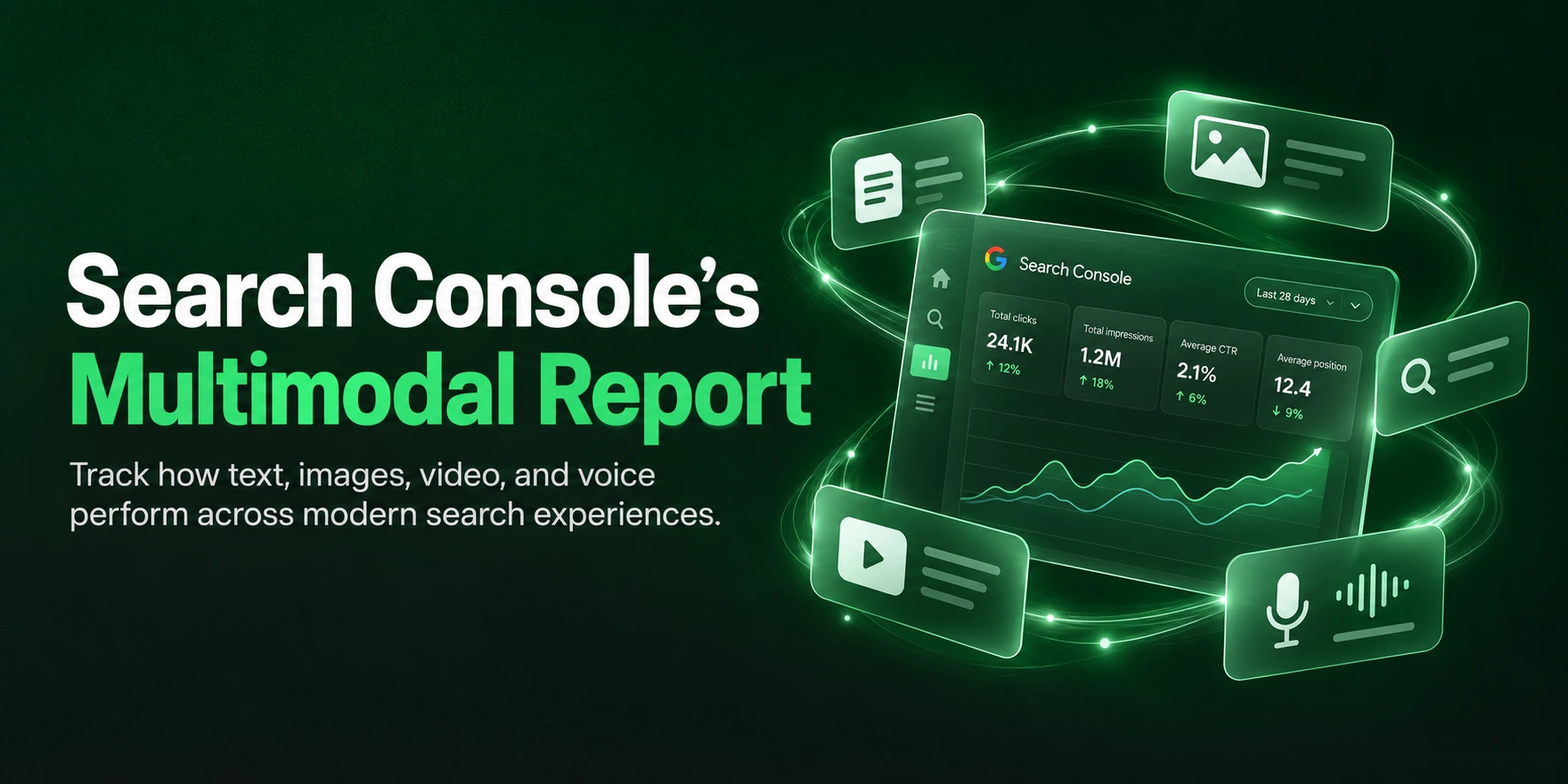
Google Search Console’s generative AI report
Google introduced Search Generative AI performance reports in Search Console in June 2026, and by 31 August 2026 the related controls had rolled out to all websites worldwide. The report shows impressions from Google’s generative AI features by page, country, device and date. It does not show clicks.
The same rollout added a control that lets site owners opt out of Google’s generative AI features entirely. Google notes that sites that opt out will not receive traffic or impressions from those features. For most jewellery brands, opting out would mean disappearing from the answers your buyers are reading, so think carefully before using it.
A simple GEO measurement stack
| What to track | How | How often |
| AI impressions on Google | Search Console generative AI report | Weekly |
| AI referral traffic | GA4 custom channel group for chatgpt.com, perplexity.ai, gemini.google.com, copilot.microsoft.com, and similar sources | Monthly |
| Prompt-level visibility | A fixed list of 30 to 50 real buyer questions, checked in Google AI Mode, ChatGPT, Gemini, and Perplexity. Record whether you are named, cited, and described correctly. | Monthly |
| Accuracy | Log every wrong fact AI states about your brand, and the source it appears to come from | Monthly |
| Product visibility | Merchant Center AI performance insights where available | Monthly |
| Business outcomes | Branded search growth, store appointment bookings, and an “AI assistant” option in your “How did you hear about us?” question | Monthly |
Three cautions:
- AI referral traffic is undercounted. Many visits from AI apps arrive as “direct” traffic, because the app does not pass a referrer.
- Platforms disagree. The Rings.com study found each AI platform recommended materially different brands. Track each platform separately rather than averaging them.
- Jewellery is ROPO-heavy. Many buyers research online and purchase offline. Track store visits and appointment bookings alongside online sales, or you will undervalue your GEO work.
For a broader view of reporting tools, see our list of tools to measure SEO performance.
ChatGPT Ads vs Organic AI Visibility
On 27 August 2026, OpenAI announced it would start showing ads to ChatGPT Free and Go users in India. TechCrunch reported a minimum daily budget of ₹725 at launch, which puts testing within reach of smaller D2C brands.
OpenAI’s help centre states that ads do not influence ChatGPT’s answers, that advertisers cannot shape or rank responses, and that ads appear below responses, clearly labelled as sponsored.
That distinction is the whole point:
| ChatGPT Ads | Organic AI visibility (GEO) | |
| Where you appear | Below the answer, labelled as sponsored | Inside the answer, as a named brand or cited source |
| How fast | Days | Weeks to months |
| What it costs | Media spend for as long as you run it | Content, PR and technical work that compounds |
| Trust signal | Lower: buyers know it is paid | Higher: buyers read it as a recommendation |
Our view: use paid AI placements to test demand around key moments such as Dhanteras on 6 November 2026 and the wedding season that follows, but do not confuse an ad beside the answer with a place in it. The brands that win long-term will do both. If you want to plan AI ads alongside Google and Meta, our performance marketing team runs these tests for jewellery brands.
What Comes Next: Agentic Shopping and UPI
AI is moving from answering questions to completing tasks.
- At Google I/O and Google Marketing Live in May 2026, Google announced Universal Cart and expanded features built on its Universal Commerce Protocol, letting shoppers check out across retailers from AI Mode, Gemini, and other Google surfaces. The first checkout partners named were US retailers, with more countries to follow.
- In India, NPCI, Razorpay and OpenAI announced a pilot for UPI payments inside ChatGPT in October 2025. In February 2026, Razorpay and NPCI launched agentic UPI payments on Claude with Zomato, Swiggy and Zepto, using consent-based spending limits.
What this means for jewellery: high-value pieces are unlikely to be bought fully by AI agents any time soon. But agents will increasingly do the shortlisting: comparing making charges, checking certification, confirming hallmarking, reading return policies. Brands whose product data, policies and prices are clear, consistent and machine-readable will make those shortlists. Brands whose details are locked in images or scattered across inconsistent pages will not.
A 90-Day GEO Plan for the Festive and Wedding Season
With Dhanteras on 6 November 2026, Diwali on 8 November, and the wedding season after it, here is a practical sequence.
Weeks 1 and 2: Baseline
- Build your list of 30 to 50 buyer questions from sales calls, store staff, WhatsApp enquiries, and search data
- Check each question in Google AI Mode, ChatGPT, Gemini, and Perplexity; record who is named, who is cited, and any wrong facts about you
- Review the Search Console generative AI report and GA4 AI referrals
- Run a crawl access check for AI crawlers and content locked in images
Weeks 3 to 6: Fix and publish
- Align brand facts across website, Google Business Profile, marketplaces, and social profiles
- Publish or rewrite 6 to 10 explainer pages for the highest-value questions, starting with festive topics such as gold rate timing, exchange offers, and gifting by budget
- Complete Merchant Center attributes for your top 100 products
- Refresh Google Business Profiles with festive photos, offers, and fresh reviews
Weeks 7 to 12: Earn mentions and measure
- Pitch one original data point or buyer guide to trade and lifestyle press
- Brief two or three creators on explainer-style content, not just product showcases
- Answer relevant community questions as a disclosed brand expert
- Publish short videos for your top five questions and embed them on matching pages
- Re-run the prompt audit and compare against your baseline
When GEO Should Not Be Your Priority
GEO is not the right first investment for every jewellery business. Be cautious if:
- Your site has basic technical problems: If key pages are not indexed, load slowly, or break on mobile, fix those first. GEO sits on top of SEO, not instead of it.
- Your reviews are weak: AI answers amplify what people say about you. If customers are unhappy, fix service and fulfilment before you seek more visibility.
- You sell mainly through marketplaces: If most revenue comes through Amazon, Myntra, or similar platforms, marketplace listing quality may matter more than your own site in the short term.
- You need sales this week: GEO compounds over months. For immediate revenue, performance campaigns are the better lever.
- You have one store and no ecommerce: Your Google Business Profile and reviews are likely the highest-return work. A full GEO programme may be more than you need.
Being clear about these limits is part of doing GEO responsibly. Any agency that promises guaranteed AI citations or “rank number one in ChatGPT” is promising something no one controls.
How Kyros Solution Helps Jewellery Brands With SEO and GEO
Kyros Solution is a digital marketing agency founded in 2019 and headquartered in Surat, the city where most of the world’s diamonds are cut and polished, with a presence in Bangalore and Mumbai. We specialise in D2C jewellery and lifestyle brands, which means our SEO and GEO work starts from category knowledge: making charges, HUID, certification, gold rate swings, festive peaks, and the online-to-store journey.
Our jewellery SEO and GEO services cover:
- AI visibility audit: your buyer questions tested across Google AI Mode, ChatGPT, Gemini, and Perplexity, with a report on where you appear, where competitors appear, and what AI gets wrong about you
- Question-level content: explainer and comparison pages written for Indian jewellery buyers, grounded in facts, not keyword stuffing
- Entity and data clean-up: consistent brand facts, Merchant Center feeds and Google Business Profiles
- Earned visibility: trade and lifestyle PR, creator briefs and expert community participation, without fake reviews or bought mentions
- Technical foundations: crawl access, page speed and structured data that matches your visible content
- Measurement: monthly prompt tracking, Search Console AI impressions and business outcomes
How an engagement usually starts:
- A prompt audit and technical check, so you see where you stand today across AI platforms and Google.
- A 90-day plan prioritised by the answer types you can realistically win, not by vanity keywords.
- Monthly reporting that ties AI visibility to enquiries, store appointments and sales.
You can see how we approach category problems in our case studies and our GIVA case study on how a D2C jewellery brand scaled.
Want to know what AI says about your jewellery brand? Ask us for a GEO visibility audit through our SEO and GEO services page. We will show you the answers you are missing, the facts AI gets wrong, and which of the four answer types you can win first.
FAQs
What is generative engine optimization in simple words?
Generative engine optimization (GEO) is the work of making sure AI tools like Google AI Overviews, AI Mode, ChatGPT, Gemini, and Perplexity understand your brand correctly, mention it, and cite your content when people ask questions you can answer.
Is GEO different from SEO?
Mostly no. Google says optimizing for its generative AI features is still SEO, because those features rely on its core ranking systems. What changes is the emphasis: third-party mentions, clear brand facts, question-level content, product data, and video matter more when the goal is to be inside an AI answer rather than just ranking a link.
Does GEO work for jewellery brands in India?
Yes, and jewellery is well suited to it because buyers ask detailed questions before spending large amounts. In our live check of Google India on 24 September 2026, AI answers for jewellery questions cited brand pages, explainer blogs, Instagram Reels, YouTube Shorts, product cards, and Google Business Profiles.
How long does GEO take to show results?
It depends on the answer type. Local and product answers can improve within weeks once Google Business Profiles and Merchant Center data are fixed. Explainer answers often take one to three months. Shortlist and trust answers take longer because they depend on third-party mentions built over time. No one can guarantee a citation.
Do you need an llms.txt file for GEO?
No. Google says its Search does not use llms.txt files. Creating one does no harm, but it will not get you cited. Focus on content quality, crawl access, and consistent brand facts first.
How can you check what ChatGPT or Google AI says about your jewellery brand?
Write down 30 to 50 questions real buyers ask, such as “best lab-grown diamond brand for engagement rings in India,” and ask them in Google AI Mode, ChatGPT, Gemini, and Perplexity. Record whether your brand is named, which pages are cited, and whether the facts are correct. Repeat monthly. You can also check the generative AI report in Google Search Console for impressions.
Can a small jewellery brand appear in AI answers ahead of Tanishq or CaratLane?
Yes, on the right questions. In our check, a smaller jeweller’s blog post was the lead citation for a 14K vs 18K question, ahead of Mia by Tanishq. Small brands have the best chance on specific explainer questions and niche shortlist questions. Broad trust questions usually favour long-established brands.
Does schema markup help with AI Overviews?
Google says no special schema is required for its generative AI features. Structured data still helps search engines understand products, prices, reviews and organisations, and it supports rich results. It must always match the content visible on the page.
Do ChatGPT ads improve your brand’s organic visibility in ChatGPT answers?
No. OpenAI states that ads do not influence ChatGPT’s answers and that advertisers cannot shape or rank responses. Ads appear below answers and are labelled as sponsored. Paid placement and organic visibility are separate efforts.
Should you block AI crawlers to protect your jewellery designs?
Think carefully before you do. Some crawlers collect content for AI model training, while others fetch pages to answer live questions and cite sources. Blocking the answer and search crawlers can remove your brand from AI answers your buyers are reading. If design protection is the concern, consider blocking training crawlers selectively, watermarking key images, and registering designs where appropriate, while keeping answer crawlers allowed.
Can you write GEO content in Hindi or regional languages?
Yes. Google AI Mode supports Hindi, Bengali, Kannada, Malayalam, Marathi, Tamil, Telugu, and Urdu. Regional content works best when your customer support, product pages, and checkout can also serve buyers in that language.
What is the Google Search Console generative AI report?
It is a report in Search Console that shows impressions your pages received in Google’s generative AI features, broken down by page, country, device, and date. It does not show clicks. Google introduced it in June 2026 and rolled out the related controls to all websites by 31 August 2026.